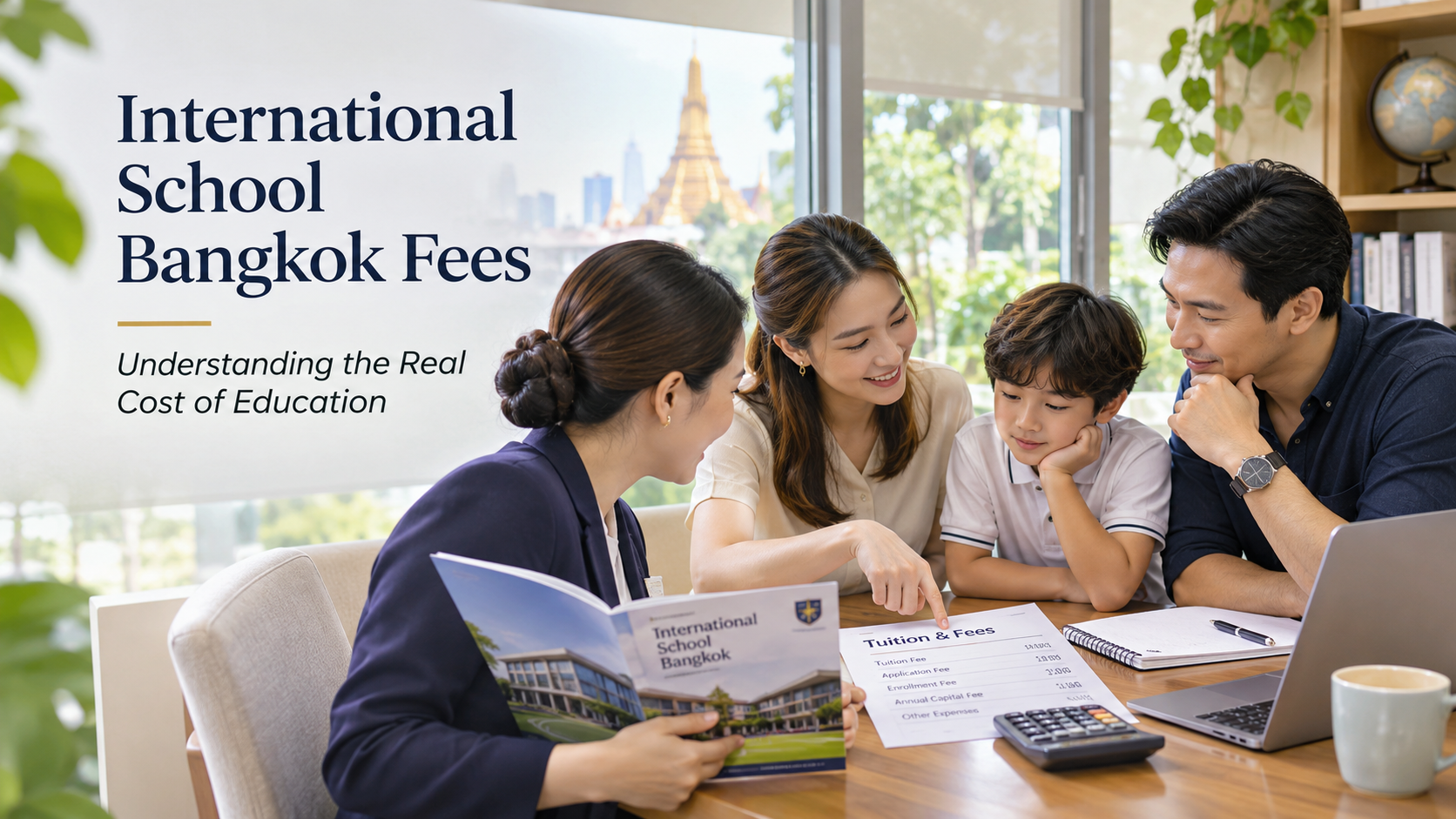
Understanding school fees is essential when planning a child’s education. For families exploring an international school bangkok, tuition is only one part of the overall financial commitment.
Additional expenses may include application charges, registration fees, uniforms, transportation, meals, technology and extracurricular activities.
These costs vary significantly between schools and educational stages.
Rather than selecting a school based solely on advertised tuition, parents should calculate the total expected cost and consider whether it is sustainable throughout their child’s education.
This guide explains common international school expenses and provides practical ways to compare educational value.
Why International School Fees Vary in Bangkok
Bangkok has international schools serving different age groups, curricula and family requirements.
Tuition fees vary according to factors such as facilities, staffing, educational programmes and operational costs.
A school offering extensive specialist facilities may have a different fee structure from a smaller institution.
However, higher fees do not automatically guarantee better educational outcomes.
Families should evaluate the teaching environment and student support alongside costs.
Curriculum and Educational Programmes
British, American and International Baccalaureate schools may have different academic structures.
Schools offering specialised courses, external examinations or extensive extracurricular programmes may incur additional operational expenses.
Parents should ask which activities and resources are included in standard tuition.
Age Group and Year Level
Fees often differ between Early Years, primary and secondary education.
Older students may require specialist classrooms, laboratory facilities or external examinations.
When comparing schools, request fee schedules covering future year groups rather than considering only the entry-level tuition.
What Does International School Tuition Usually Cover?
Tuition generally supports classroom teaching and routine educational operations.
However, the exact inclusions vary by institution.
Some schools include certain learning materials or activities, while others charge separately.
Parents should request written information about what tuition covers.
Academic Resources and Classroom Materials
Books, learning platforms, digital devices and classroom resources may be included in tuition or billed separately.
Certain subjects can require additional supplies.
Ask whether families must purchase textbooks, personal devices or specialist equipment.
Extracurricular Activities
Schools may offer sports, performing arts, music and academic enrichment.
Some activities are included in normal school fees, while others involve additional charges.
Specialist coaching, external competitions and off-campus programmes may increase costs.
Parents should distinguish between compulsory expenses and optional opportunities.
Understanding One-Time School Charges
International school applications may involve fees that are separate from annual tuition.
Understanding these charges is important when comparing admission offers.
Application Fees
An application fee may cover administrative processing or assessments.
This charge is often payable before an admissions decision.
Parents should confirm whether it is refundable.
Registration and Enrolment Fees
Some international schools charge a one-time registration or enrolment fee.
This payment may be required to secure a place.
The amount, refund policy and payment deadline should be confirmed directly with admissions.
Deposits and Advance Payments
Schools may request refundable or non-refundable deposits, depending on their policies.
Parents should ask when deposits are returned and whether any notice period applies before withdrawal.
Written confirmation helps avoid misunderstandings.
Additional Annual Expenses to Consider
International education involves practical costs beyond classroom teaching.
These expenses can become significant over multiple academic years.
School Transportation
Transport expenses depend on distance, route availability and the school’s arrangements.
Some families use school bus services, while others arrange private transportation.
Bangkok traffic conditions may influence both cost and daily convenience.
Uniforms and Equipment
Uniform requirements can include regular school clothing, physical education kits and formal attire.
Students may also need shoes, bags and specialist equipment.
Parents should enquire about replacement costs as children grow.
Meals and Daily Expenses
Schools may provide meals within tuition or charge separately.
Additional expenses can include snacks, trips or occasional school events.
Understanding which costs are compulsory helps families prepare more accurately.
How to Calculate the Total Cost of International Education
A useful school budget should include initial enrolment expenses, recurring annual fees and optional activities.
Parents can organise costs into three categories.
The first category covers one-time charges such as application and registration.
The second includes recurring expenses such as tuition, transport and meals.
The third includes variable expenses such as trips, competitions and optional enrichment.
Planning Beyond the First Academic Year
International education can represent a long-term commitment.
Families should consider potential fee increases and changes in expenses as children progress through year groups.
Financial planning should include realistic allowances for unexpected costs.
Parents may also wish to compare available payment schedules and understand whether instalments carry additional conditions.
Comparing Educational Value Instead of Price Alone
An affordable fee structure is important, but families should also evaluate what children receive from their educational experience.
Relevant considerations include teacher qualifications, curriculum quality, academic guidance and wellbeing support.
Facilities and extracurricular opportunities also contribute to the overall experience.
A school’s educational value depends on how effectively these resources support students.
Teacher Quality and Individual Attention
Experienced teachers who understand different learning needs can contribute significantly to student progress.
Parents should ask how the school monitors academic development and offers support.
Smaller learning groups may provide opportunities for individual guidance, but staffing quality and teaching methods remain essential.
Academic and Personal Development
International education should encourage knowledge, confidence and independent thinking.
Students benefit from environments that support academic ambition without neglecting emotional wellbeing.
Sports, arts and community activities may provide important opportunities beyond formal examinations.
Families should evaluate whether these experiences align with their child’s interests.
Exploring Brighton College Bangkok
Brighton College Bangkok is a British international school with campuses at Krungthep Kreetha and Vibhavadi.
Its educational approach combines academic ambition with opportunities for personal development.
The school emphasises individual potential, confidence and a supportive community.
Families comparing British international education can visit Brighton College Bangkok Vibhavadi to explore the school and find information about its campuses.
For accurate tuition details, parents should request the latest fee schedule from the admissions team at the relevant campus.
This is particularly important because fees, included services and year-group availability may change.
Questions to Ask Before Paying School Fees
Before accepting a place, request a complete breakdown of compulsory charges.
Ask which fees are refundable and whether payment schedules are available.
Families should also clarify what happens if a student transfers or withdraws during the academic year.
Admissions and Payment Checklist
Useful questions include:
- Which expenses are included in annual tuition?
- Are there one-time registration or assessment fees?
- Are school lunches and transportation charged separately?
- What are the payment deadlines?
- Are there additional examination fees?
- How are annual tuition adjustments communicated?
Clear answers support better financial planning.
Frequently Asked Questions About International School Fees
How much does an international school in Bangkok cost?
Fees vary widely depending on the institution, year group, curriculum and included services. Parents should check current official fee schedules for accurate figures.
Are registration fees included in tuition?
Not always. Some schools charge separate application, registration or enrolment fees.
Do international school fees increase as children get older?
They may. Fee structures often differ between primary and secondary stages and can change annually.
Can international school tuition be paid in instalments?
Some schools offer term-based payments or other schedules. Families should confirm available arrangements directly with admissions.
Is a more expensive international school always better?
No. Teaching quality, curriculum suitability, wellbeing and educational environment matter more than price alone.
Conclusion
International school fees in Bangkok involve more than annual tuition.
Understanding registration charges, transportation, meals, learning resources and future expenses helps families create realistic budgets.
By comparing total costs alongside curriculum quality and student support, parents can make financially informed decisions without overlooking educational needs.
Requesting official fee information and visiting shortlisted schools are practical steps toward selecting a suitable international education.